So, you took your sound healing training, became a certified sound healer, and now what? How can you grow as a sound healer beyond your sound healing certification?
This is a question that has probably crossed your mind, just as it did for me and for many sound healers I know. It is a very common question that most sound healers and sound healers face at some stage of their journey.
Many of us in the Western world grow up in competitive environments. Because of that, we often carry a feeling of not being enough, or a sense of insecurity. As a result, we feel the need to keep learning more, doing more, and acquiring more, just to feel worthy. Even when we study a lot, gain advanced knowledge, invest in good instruments, and receive positive feedback, the feeling that we need to grow can still be there. And that is completely normal.
Personally, I have a very curious mind and I am always eager to learn new therapies and techniques. To give you an example, it took me three years after starting my sound healing journey, and after attending several sound healing courses, before I felt ready to offer sound therapy to a client. Over time, I noticed that studying with different teachers and learning different theories, protocols, and practices helped me become more flexible and confident. It allowed me to improvise more naturally in both one to one and group sessions.
I have trained in various sound healing schools from different parts of the world and participated in both online courses and in person workshops with many teachers. I can honestly say that each program and each teacher had a unique approach. Every single one of them offered me something valuable. Sometimes it was guidance on how to move forward, and other times it was clarity on what I did not want to include in my own practice.
This diversity in learning helped me gain a more holistic understanding of the therapeutic aspects of sound. It also allows me today to combine different perspectives and share this knowledge with my own students.
Below, I will share some ways we can grow as human beings and, through that, grow as sound healers, or sound healers, if you prefer. By the way, I am not the biggest fan of the term healer, as I strongly believe in the idea of self healing.
Meditation will make your practice better
First and foremost, meditation is a practice that can accompany you throughout your whole life, not only to become a better sound healer, but also a better human being. Meditation changed me in a tremendous way almost 20 years ago and I consider it the best practice I ever had for my wellbeing and that’s why it’s first on my list.
I used to be very active in my mind, with one thought following another without any pause, and as you can imagine, I was quite an anxious person. I remember meeting my best friend Fenia after not seeing her for some time. About three or four months after I had started meditating, she noticed that something had changed in me, how calm I was. And indeed, meditation has helped me tremendously: to be more present, to have more mental clarity, to stop letting my thoughts and emotions constantly take me on their journey, and in general to be more gentle and loving with myself and with others.
Having noticed the importance of meditation in my wellbeing, I now consider it as essential as food, and I never let a day pass without meditating. Over the last couple of years, after attending my first Vipassana meditation retreats, I have come to see meditation as a moment-to-moment practice, an ongoing effort to be as present as possible.
So, when it comes to sound healing, I can’t stress enough how important meditation is for a sound healer. By incorporating mindfulness, traditional meditation or even sound meditation into your daily life, you learn how to be more present, more attentive, and more receptive, both to what is happening within you and to what the receiver experiences during a sound therapy session.
Meditation helps you become more intuitive and more like an empty vessel, where all your attention is on the receiver. Trust me, people feel it when you are truly present while they speak, and this is often the first step toward building trust. And without trust, healing cannot occur.
Practice deep listening meditation. Observe subtle tones, notice resonance in your body, and become aware of silence. Meditation is not only about sitting down for 10 or 30 minutes and stay still. The deeper idea is to bring silence into your mind and into your life, to be meditative rather than just meditate. To be present in every moment, not only during the time you sit on a cushion.
Being present throughout your sound healing sessions gives you the ability to truly “listen” to what is happening in your client’s body and biofield as well as within yourself, and to offer a more complete session that responds to their real needs.
Understand the Concept of Resonance
Resonance happens when the vibration of one object influences another, causing them to align in rhythm or frequency. This principle helps explain why sound can create harmony within the body.
There are some beautiful and fascinating examples of resonance that can truly open your mind. I always share these with my Level 1 students, such as the metronome effect example and the glass resonance. They clearly demonstrate how vibration can influence and organize matter.
We also see resonance in nature and in human biology. A well-known example is how women’s menstrual cycles often synchronize when they spend a lot of time together. I first learned about this while studying in the UK, when my female classmates who were living together in student dorms noticed their cycles slowly aligning. I found this deeply fascinating. Another great example is when you enter a temple where monks meditate and you feel this deep inner peace, or in contrast when you enter a night club or a music venue and you instantly entrained to the vibes of the music and the people dancing.
The more you understand resonance, the deeper your understanding of sound and energy healing becomes.
Learn the Physics of Sound
If you truly want to understand how sound healing works, it’s important to explore the science behind sound. This means learning how sound is produced and, just as importantly, how it is perceived, not only through hearing, but through the entire body. It still surprises me that in some schools I attended, this topic was barely mentioned. For me, it is essential.
Understanding the physics of sound, together with basic human anatomy, helps you better understand how different frequencies interact with the body, both your own body and the body of the person receiving the session.
Learn How the Brain Works
It’s essential to understand the brain and how sound can affect our brain waves and, in turn, influence the body, the mind, and our emotions. Our brain waves naturally synchronize with the rhythm of periodic external stimuli, such as sound or visual patterns. By learning the theory of brain entrainment, you can use sound frequencies more intentionally, knowing when and how to work with higher or lower pitches, how to adjust tempo, and what effects these choices may have on the listener.
A popular example of brain entrainment is binaural beats. In this method, the listener uses headphones. One frequency is delivered to one ear and a slightly different frequency to the other. The brain then perceives a third frequency that doesn’t physically exist. This perceived frequency can sometimes fall beyond the limits of normal hearing, a phenomenon known as psychoacoustics.
Binaural beats help the brain perceive frequencies that the auditory system cannot process on its own, such as very low frequencies under 20 Hz, which can support deep relaxation. For example, if 108 Hz is played in the left ear and 101 Hz in the right ear, the brain perceives the 7 Hz difference. This falls within the theta brainwave range, helping the brain mirror that frequency and enter a theta state.
There is research supporting these effects. For example, an interesting study on acoustic brain entrainment showed that exposure to sounds associated with delta brain waves (0.5–4 Hz) during sleep improved memory in healthy individuals.
Understand the nervous system and human physiology
Another very important aspect is understanding the body and how sound can affect the nervous system. Some widely circulated figures suggest that around 75%–90% of visits to primary care doctors in the US are related to stress-related conditions. Stress is, in many ways, the virus of our time, and the nervous system is the control center. Therefore, it’s essential to deeply understand how the nervous system works and how, as sound therapists, we can help bring it back into balance.
When we regulate the nervous system, we support balance in the whole being. In sound healing, one of our main focus points is nervous system regulation, achieved through various practices. That’s why it’s important for a practitioner to understand the theory behind the nervous system, to become familiar with terms such as the sympathetic and parasympathetic systems, the vagus nerve, and polyvagal theory.
Another interesting fact is that 60%–70% of the human body consists of water, most of it inside our cells, and water is an excellent conductor of sound waves. Sound travels about five times faster in water than in air. So you can imagine the impact a singing bowl placed on the body, or the frequencies of a gong, might have on our physiology.
Learn Energy Healing theory and practices
If you want to go a bit further down the rabbit hole, I suggest you study energy work and energy healing theory. This includes learning about energy anatomy, from energy centers such as the chakras to meridians and biofield science.
By studying the basic theories behind energy medicine and energy practices, you create a solid foundation for understanding how energy healing works, both on the body and off the body. It’s also important to have a basic understanding of quantum physics theory, as well as to truly grasp the role and power of intention in healing. This is also what helps explain how distant healing works.
As sound healing pioneer Jonathan Goldman has stated: sound + intention = healing.
Learning about the biofield and how sound can influence it is another key piece of the puzzle. Some energy healing modalities that can be very supportive are Reiki, Pranic Healing, or Quantum Healing. Do your research, explore them, and see which one feels more natural and aligned with you.
Learn about music theory in sound healing
It doesn’t matter if you have no background in music at all. It’s never too late to start learning about harmonics, overtones, and basic music theory. I promise you that this will help you become more versatile in your offerings and feel more confident when working with the different protocols and techniques you’ve learned.
Half, or even more, of my students who start my basic sound healing training have zero musical education, and that’s completely okay. You can learn the basics during your sound healing training, but it can be very beneficial to go a bit deeper. Learning about major and minor tones, for example, allows you to combine sounds more consciously and adapt them to the needs of each client.
Instrument Mastery
Spend time using your sound healing instruments for your own personal practice. When it comes to sound healing, I don’t really believe in the idea that practice makes perfect. I do believe that practice brings experience, but I’m not a fan of the word perfect, because in healing there is no perfect healing. There is simply healing.
From my perspective, having no expectations and letting go of the result is key to offering the best possible experience to the receiver. That said, I do strongly suggest practicing on a daily basis. Over time, you will start feeling more comfortable with your instruments, your hearing will sharpen, and your senses and intuition will naturally develop.
This could mean playing your Tibetan singing bowls intuitively while meditating on the sound and on the sensations each combination or technique creates in your body. Try all the techniques you have learned, again and again, until the mallet or the instrument feels like an extension of your own arm. Holding and playing the instrument should feel completely natural, so that during a session your full attention can be on the receiver’s needs, not on your grip or on how you are playing.
Here is a blog post I’ve written about the most common sound healing instruments used for sound therapy and relaxation.
Be curious
Another helpful approach is micro learning. You can explore different theories and methodologies of sound healing, step by step, without trying to learn everything at once.
Study the Western side of sound therapy through scientific research that has been done over the years. Look into what has actually been studied and applied, and how specific sounds and instruments can support nervous system regulation, induce relaxation, and help release trapped emotions.
At the same time, explore traditional practices, from the Nepali, Tibetan and Vedic systems to Mongolian or Amazonian shamanic traditions. Across cultures and throughout ancient times, sound has been used as a healing modality by shamans and healers. Stay curious, explore these practices, and notice how they resonate with your own understanding and experience.
Educate yourself – read books and papers
There are many great books on sound healing and energy healing. Some popular and helpful examples are The Healing Power of Sound by Mitchell Gaynor, The 7 Secrets of Sound Healing by Jonathan Goldman, Human Tuning by John Beaulieu, and The Tao of Sound by Francine Milford.
Follow the work of pioneers in the field such as Jonathan Goldman, John Beaulieu, Fabien Maman, Tom Kenyon, Eileen McKusick, and Laurel Elizabeth Keyes. I also recommend staying up to date with research on sound healing and sound therapy. Reading and learning from different perspectives will help you deepen your understanding and refine your own approach.
Record yourself
If you want to understand where you are in your practice, a simple and very effective method is to record your sessions. Then, spend some time alone and listen to the recording as if you were the receiver.
You might notice that you are rushing, or that your strikes are too intense, making it difficult for the receiver to relax and let go. Especially at the beginning of your sound healing journey, it’s normal to feel a bit fragile when receiving negative feedback after a session. That’s completely natural.
The way to improve as a sound healer is to stay open to criticism and feedback. You cannot really grow if everyone only tells you how wonderful the session was. Honest feedback — especially when something didn’t feel right — can offer valuable insight. Personally, I always looked for comments that could help me improve rather than focusing only on compliments.
I don’t get annoyed or affected by negative comments. Instead, I try to see if there is something I can learn from them. One important tip is not to take feedback too personally, whether it’s positive or negative. Be honest with yourself, don’t see feedback as an insult, and notice if there is any truth in it. If there is, take it into account and see how you can apply it in your next session.
From the moment I stopped taking feedback personally, I felt freer, lighter, and healthier — both as a practitioner and as a human being.
Follow an experienced sound healer
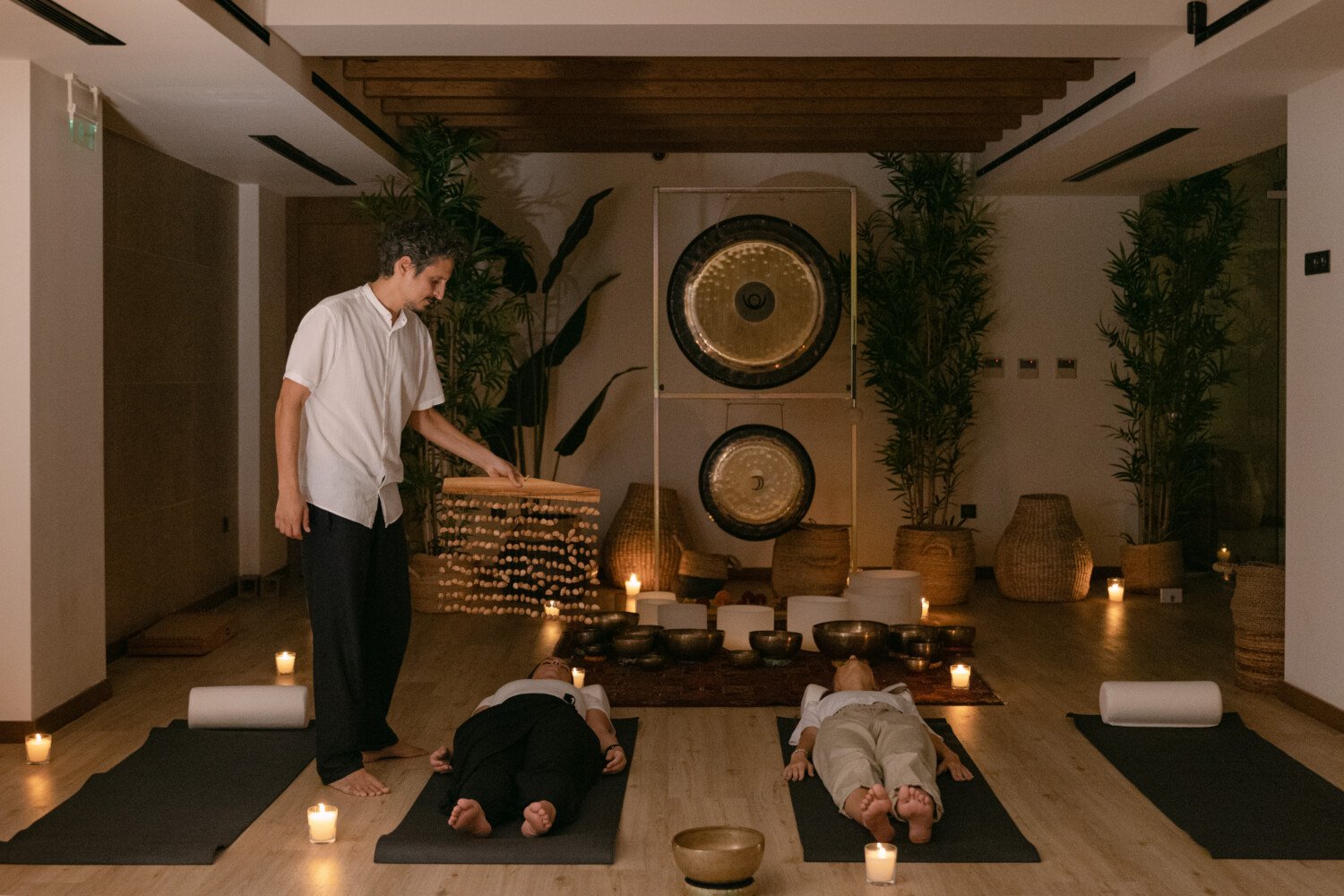
One of the best ways to grow is to follow an experienced sound healer and support them in their work. You can ask your teacher if you can assist during group sound healing sessions. This gives you the opportunity to observe, in real time, how they handle different situations and how they hold space for a group.
In my own journey, when I first started, I was assisting my teacher Elena during her sound baths. I helped with the organization, the setup, and during the sessions she guided me on what to do. Through this process, I was also learning how to hold space for others.
I feel very grateful to have had Elena as my teacher, because she gave me the space to explore my intuition with different sounds. Slowly, step by step, we began working as a team. Being an apprentice is not a bad thing at all — on the contrary, there is so much to learn by working alongside an experienced sound healer.
Excel in Your Existing Services
Whether you focus on one-to-one sound therapy or group sound baths, it’s essential to offer the best possible experience to your clients. They need to feel safe, comfortable, and supported enough to trust you and fully let go, because without trust, healing cannot unfold.
This goes beyond practicing with your instruments. It’s equally important to create an environment where people feel at home and to build genuine rapport. Being able to clearly and calmly explain what sound healing is, how the session works, and what they can expect helps clients relax and feel held in the process.
Just as important is your ability to truly listen, not only to what your clients say, but to what they need beneath the words. When people feel seen, heard, and understood, your work naturally deepens and your sessions become more effective.
Exchange with other colleagues
Stay connected with your fellow sound healing students and colleagues, and exchange sessions from time to time. This way, you receive feedback from another sound healer, which can be extremely valuable. You can also attend each other’s sound baths, you attend theirs, and they attend yours. In this way, everyone benefits.
One common mistake many sound healers make (and I include myself here) is focusing only on offering therapy to others while forgetting to receive. Often, we only remember to book a session for ourselves when we are already burned out or feeling out of balance.
Remember how important it is to maintain your own daily practice, so you can stay centered and grounded. This is essential if you want to remain balanced and truly able to offer your work and your presence to others.
These were just some ideas on how you can grow as a sound healer but also as a human being. Of course there are many more ways so please feel free to send me a message to share
If you’re a sound healer looking to deepen your practice or explore advanced training, feel free to get in touch or explore my sound healing seminars and mentorship programs.